
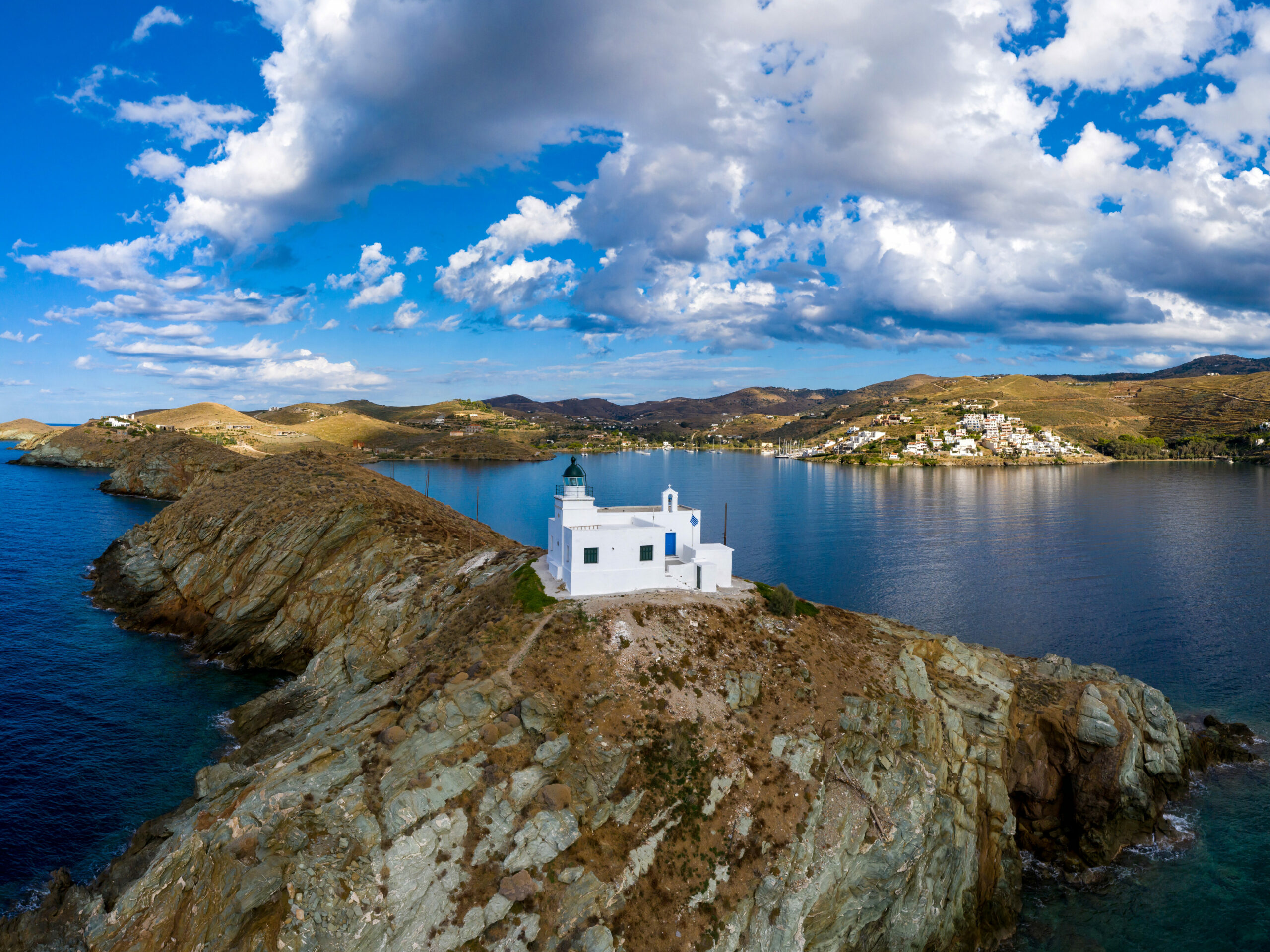
Ancient Karthaia
Karthaia is the most important archaeological site on Kea: an ancient city with temples, a theatre, fortifications and an ancient breakwater, set above two beaches on the island’s southern coast. It was the most prominent of Kea’s four ancient city-states and is accessible only by footpath or boat.
The Site
Karthaia’s earliest significant habitation dates to the Geometric period, though sporadic finds go back to the early Cycladic era. The city reached its height in the 6th and 5th centuries BC and survived as a settlement into the Palaeochristian years. At its peak it had public buildings, workshops, mines and a water supply system, all enclosed by defensive walls with extensive towers.
What survives today includes the remains of a temple of Apollo (5th century BC) and a temple of Athena (late 6th century BC), an ancient theatre dating to around the 1st century, and the fortified acropolis. The ancient breakwater is also visible. Excavation finds from Karthaia are displayed in the Archaeological Museum in Ioulida.
Book Experiences in Kea
Browse and book guided tours, activities and day trips in Kea through Viator.
Getting There
Karthaia is about 23 km from Ioulida by road, but the site itself has no road access — the final approach is always on foot or by boat. Walking routes from several directions are part of the official path network:
- Route Aristeos (Route 3) — from Ioulida via Profitis Ilias; approximately 11.85 km; the island’s most complete cultural walk, passing the island’s highest point
- Routes 5, 6, 7 — shorter approach paths from different trailheads; ranging from approximately 1.7 to 3.15 km; more practical for travelers arriving by car at the road end near Kato Meria
- By boat — seasonal boat access from Korissia or Koundouros; check current operators locally
Planning Your Visit
Karthaia is an exposed site with no shade, no facilities and no water. Visits in summer require an early start to avoid midday heat, particularly on the longer Aristeos route. Combine with a swim at the Karthaia-Poles beaches on either side of the promontory — the beaches have clear water and pebbles, and are as remote as the site itself.
- Start any long walk before 8am in July and August
- Bring at least 2 litres of water per person
- Pack food for the full day — there is no taverna at the site or beaches
- Wear closed footwear with grip, not sandals
- Verify path condition locally before any long or remote route
Also in Kea
Karthaia-Poles Beaches
Two beaches beside the ancient city
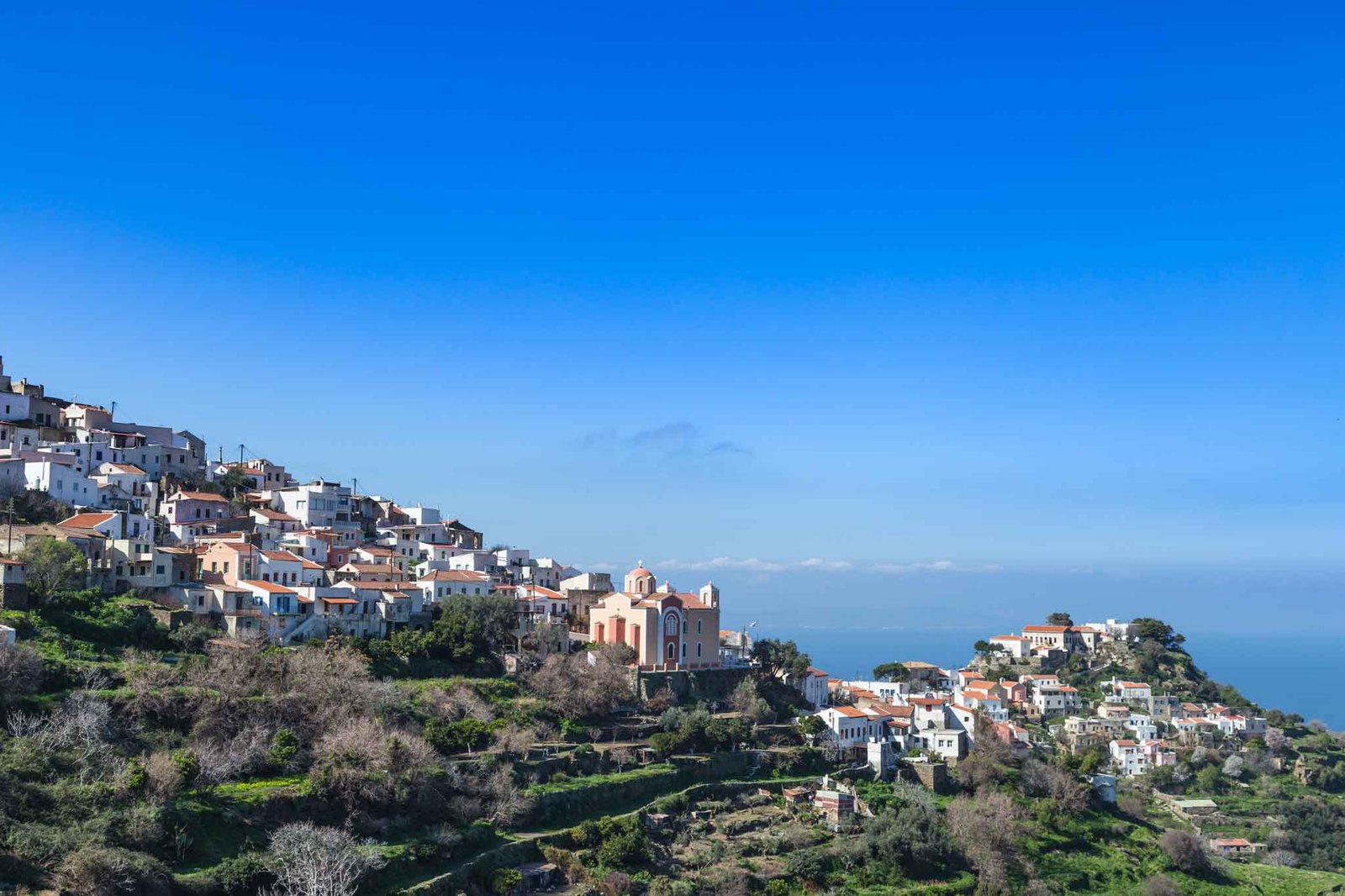
Hiking in Kea
Route Aristeos from Ioulida
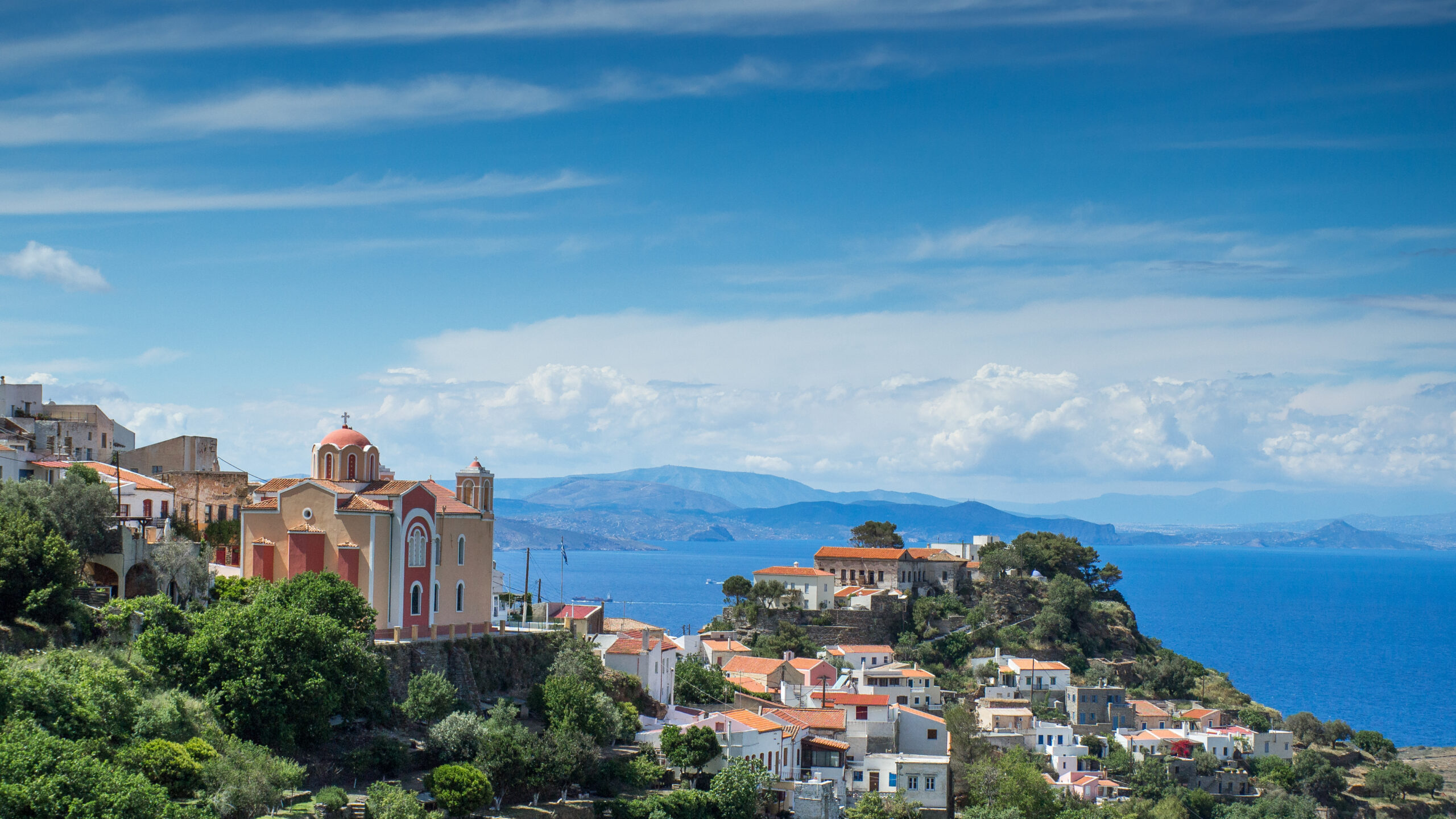
Archaeological Museum
Karthaia finds displayed in Ioulida